


World Breastfeeding Week 2026: Every Feed, Every Bond, Every Day
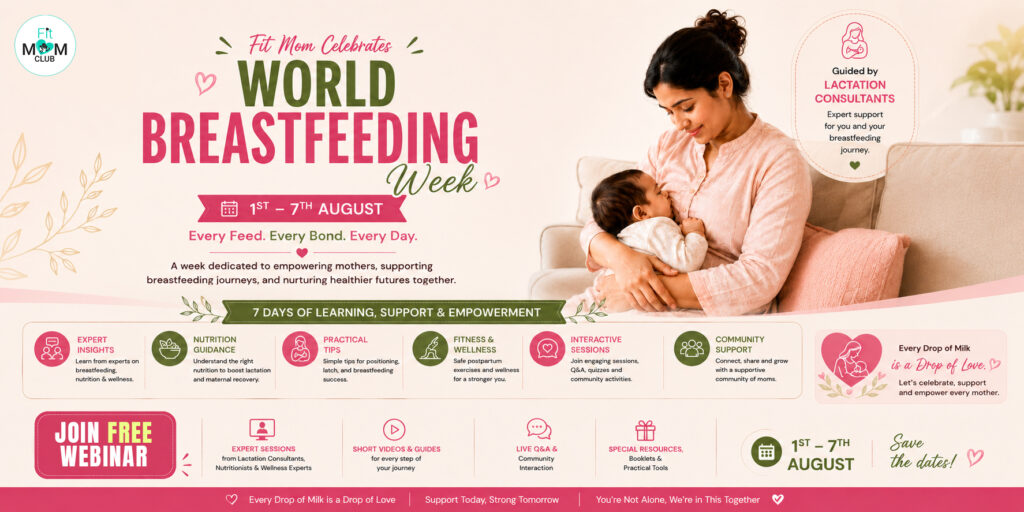
Every year from August 1st to 7th, mothers, healthcare providers, and wellness communities around the world observe World Breastfeeding Week a movement started to protect, promote, and support breastfeeding as a foundation of maternal and infant health. At FitMom Club, we mark this week not with slogans, but with something more useful: real guidance from lactation consultants, dietitians, and postpartum fitness experts who work with new mothers every single day.
This year’s theme for us is simple Every Feed. Every Bond. Every Day. Because breastfeeding isn’t a single milestone you either “achieve” or don’t. It’s a daily relationship between a mother’s body, her baby, and the support system around her. And that support system is where most of the real difference gets made.
This guide brings together everything a breastfeeding or soon-to-be-breastfeeding mother needs to know — nutrition, positioning, postpartum recovery, and the transition to weaning in one place.
Why World Breastfeeding Week Matters
World Breastfeeding Week was established to raise awareness of breastfeeding’s role in reducing infant illness and mortality, while giving mothers the information and support they need to breastfeed successfully. The World Health Organization recommends exclusive breastfeeding for the first six months of a baby’s life, followed by continued breastfeeding alongside complementary foods up to two years or beyond.
But recommendations on paper don’t always translate to support in practice. Many new mothers face a gap between “you should breastfeed” and “here’s exactly how, and here’s what to do when it’s hard.” That gap — around latch difficulties, milk supply worries, nutrition confusion, and the physical toll of postpartum recovery — is where most breastfeeding journeys quietly struggle. This week is about closing it.
Nutrition for Breastfeeding & Lactation: What Actually Helps
A breastfeeding mother’s body is doing significant metabolic work, and nutrition plays a direct role in both milk production and her own recovery. A few evidence-informed principles our nutrition team emphasizes:
- Protein at every meal. Lean meats, eggs, dals, paneer, and legumes support tissue repair and milk protein synthesis.
- Iron and calcium replenishment. Postpartum iron stores are often depleted; leafy greens, jaggery, ragi, and calcium-rich dairy or fortified alternatives matter here.
- Hydration, consistently. Milk is largely water — steady fluid intake throughout the day (not just when thirsty) supports supply.
- Healthy fats for milk quality. Ghee, nuts, seeds, and fatty fish (where suitable) contribute to the fat composition of breast milk.
- Consistent meal timing over “eating more.” Many mothers assume they need to eat significantly more; in practice, consistent, balanced meals matter more than raw quantity.
There’s no single “lactation superfood” — the idea that one ingredient dramatically boosts supply isn’t well supported. What helps more reliably is a consistent, balanced diet paired with adequate rest and frequent feeding or pumping, which is the actual physiological driver of milk supply.
Latch and Positioning: The Practical Foundation
A poor latch is one of the most common — and most fixable — reasons breastfeeding becomes painful or inefficient. A few positioning fundamentals our lactation consultants walk mothers through:
- Bring baby to the breast, not breast to baby. Positioning baby’s whole body facing the mother, tummy to tummy, reduces strain on the neck and improves latch mechanics.
- Watch for a wide-open mouth before latching. A shallow latch is a leading cause of nipple pain.
- Support the breast in a “C-hold” away from the areola so it doesn’t interfere with baby’s mouth position.
- Try more than one position. Cradle hold, football hold, and side-lying each suit different situations — engorgement, C-section recovery, or nighttime feeds.
- Pain that persists beyond the first few seconds of a feed is a signal, not something to push through. It usually means the latch needs adjusting, not that breastfeeding “isn’t working” for that mother.
These are teachable, correctable skills — which is exactly why hands-on sessions with a qualified lactation consultant tend to resolve issues that generic online advice can’t.
Postpartum Recovery and Movement
Breastfeeding and physical recovery are deeply connected — poor posture during long feeding sessions is a common contributor to neck, shoulder, and back strain in new mothers. Safe, postpartum-appropriate movement can help in several ways:
- Improving posture and reducing feeding-related muscle tension
- Gently rebuilding core and pelvic floor strength after pregnancy and delivery
- Supporting energy levels and mood through light, consistent activity
- Aiding gradual, healthy recovery without pressure around rapid “bounce-back” timelines
Any postpartum fitness plan should be paced to the individual — vaginal delivery and C-section recovery timelines differ, and movement should always be guided by a qualified postpartum fitness professional rather than a generic program.
Weaning and the Next Nutritional Chapter
As babies approach six months, the transition to complementary foods becomes the next milestone alongside continued breastfeeding. A few guiding principles:
- Introduce single-ingredient foods first to monitor for reactions
- Iron-rich purees (like ragi, moong dal, and pureed vegetables) are especially important as a baby’s iron stores from birth begin to deplete around this age
- Texture should progress gradually — purees, then mashed, then soft finger foods — in line with the baby’s developmental readiness
- Breastfeeding continues to provide immune and nutritional value well after complementary foods are introduced, and doesn’t need to stop just because solids have started
You're Not Alone, We're In This Together
If there’s one message we want every mother to leave this week with, it’s this: struggling with breastfeeding doesn’t mean you’re doing it wrong. Latch difficulties, supply worries, and exhaustion are common — and they’re solvable with the right support, not something to push through silently.
That’s the spirit behind FitMom Club’s World Breastfeeding Week programming this August 1–7 — expert sessions with lactation consultants, nutrition guidance for breastfeeding mothers, practical positioning workshops, postpartum fitness support, and a community of mothers navigating the same journey.
Frequently Asked Questions
How long should I exclusively breastfeed my baby? Most health authorities, including the WHO, recommend exclusive breastfeeding for the first six months, followed by breastfeeding alongside complementary foods for up to two years or beyond, based on the mother and baby’s needs.
What foods increase breast milk supply? No single food dramatically increases supply — consistent, balanced nutrition (adequate protein, iron, calcium, and hydration) combined with frequent, effective feeding or pumping is what supports milk production most reliably.
Why does breastfeeding hurt, and is that normal? Some initial sensitivity is common, but ongoing pain usually signals a latch issue rather than something to endure. A lactation consultant can identify and correct positioning problems quickly.
When should I start introducing solid foods? Most babies are ready for complementary foods around six months, alongside continued breastfeeding — starting with iron-rich, single-ingredient purees before progressing in texture.
Can I exercise while breastfeeding? Yes, with appropriate pacing. Light, postpartum-specific movement can support posture, core recovery, and energy — but it should be guided by a qualified postpartum fitness professional and adjusted to your individual delivery and recovery timeline.
FAQs
What is the best way to lose weight naturally?
The best natural weight-loss method includes eating whole foods, reducing portion sizes, choosing high-fiber carbs, increasing protein, staying hydrated, and being physically active.
Can I lose weight without dieting?
Yes. Weight loss is possible through mindful eating, portion control, and choosing balanced meals instead of restrictive dieting.
What foods help with weight loss?
High-protein foods (chicken, eggs, yogurt), fiber-rich foods (oats, veggies), fruits, nuts, seeds, and whole grains all support weight loss.
Are carbs bad for weight loss?
No. Carbs are essential. Choose complex carbs like oats, whole grains, and sweet potatoes because they stabilize blood sugar and keep you full longer.
How much water should I drink to lose weight?
Aim for 8–10 glasses a day. Staying hydrated helps prevent overeating, boosts metabolism, and supports digestion.
Do I need to exercise every day to lose weight?
No. Even 30 minutes of walking daily plus strength training 2–3 times a week can significantly improve fat loss.
Is high protein eating good for weight loss?
Yes. High-protein diets reduce cravings, increase satiety, and help maintain muscle while losing fat.
Loved the Post? Share It!
Book your Free Consultation Now
Just fill in the form & our Health Consultant will get in touch with you
❌ Please fill all required fields.
✅ Thank you for submitting the form Our Health Consultant will reach out to you. Please respond to that.