


Why Moms Over 30 Need Mobility Training More Than Flexibility
You’ve done the stretches. You’ve rolled out the yoga mat. You still wake up stiff, your hips ache after school pickup, and that lower back won’t quit. Sound familiar?
Here’s what most fitness content misses: after 30, and especially after having kids, flexibility alone isn’t enough. What your body truly needs is mobility training and there’s a significant difference between the two.
At FitMom Club, we believe every mom deserves to move through life painfree, energized, and strong. This guide breaks down why mobility training for moms over 30 is a gamechanger andhow to start today.
Flexibility vs Mobility: What's the Real Difference?
Most women grew up equating fitness with being able to touch their toes. But flexibility and mobility are not the same thing and confusing them may be the reason your body still feels tight and restricted.
Flexibility
Flexibility is the passive ability of a muscle to lengthen. It’s what you feel during a static stretch useful, but limited in realworld function.
Mobility
Mobility is active control through a full range of motion. It means your muscles, joints, and nervous system work together to move freely and with strength. Bending down to pick up your toddler, sitting crosslegged on the floor, reaching overhead without shoulder pinching that’s mobility in real life.
Simply put: flexibility is how far your body can go. Mobility is how far it can go and stay in control.
Why Mobility Matters More After 30 (Especially for Moms)
After 30, several key physiological changes make mobility training for moms not just helpful but essential:
- Hormonal shifts:
- Declining estrogen affects joint lubrication and connective tissue elasticity.
- Postpartum changes:
- Pregnancy and childbirth alter pelvic alignment, hip mechanics, and core stability often permanently, if left unaddressed.
- Sedentary patterns:
- Long hours of sitting at desks, in the car, nursing create tight hip flexors and thoracic stiffness.
- Muscle imbalances:
- Mom life creates repetitive patterns (carrying, bending, feeding) that shorten some muscles and weaken others.
Targeting flexibility alone won’t reverse these patterns. Mobility training does.
5 Mobility Moves Every Mom Over 30 Should Be Doing
You don’t need an hour at the gym. These functional fitness moves for mothers can be done at home in 15 minutes:
- 90/90 Hip Stretch
- Opens hip rotators and reduces lower back tension. A must for postpartum hip mobility.
- World’s Greatest Stretch
- Combines hip flexor lengthening, thoracic rotation, and ankle mobility in one movement.
- CatCow with Lateral Flexion
- Rehydrates spinal discs and restores thoracic mobility lost from feeding or desk posture.
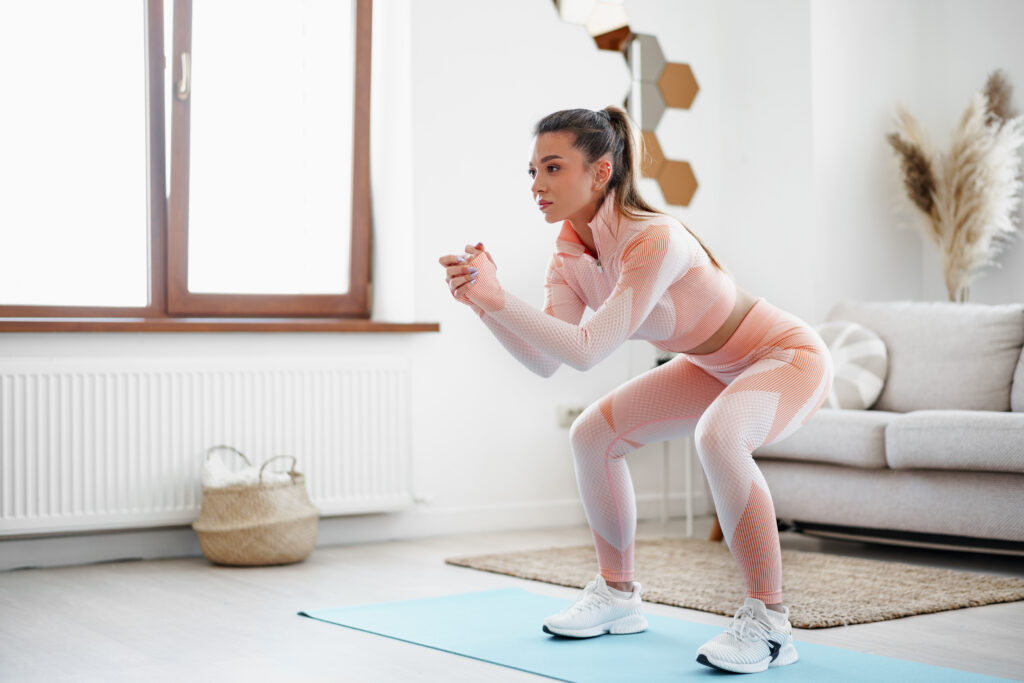
- Deep Squat Hold
- Restores ankle, knee, and hip joint range of motion. Great for pelvic floor health too.
- Shoulder CARs (Controlled Articular Rotations)
- Keeps shoulder joints healthy for all that overhead lifting and carrying.
- Pro tip: Pair these with deep breathing for double the benefit mobility improves faster when your nervous system is calm.
How to Build a Simple Mobility Routine That Actually Sticks
The number one reason moms quit fitness routines? They’re too long and too complicated. Here’s a simple framework for how to improve joint mobility at home without overhauling your schedule:
- Morning (5 min):
- Catcow + deep squat hold + neck rolls. Sets up your body for the day.
- Afternoon (5 min):
- 90/90 hip stretch on each side. Perfect during your child’s nap.
- Evening (510 min):
- World’s greatest stretch + shoulder CARs. Winddown for your joints.
Consistency over duration, every time. A 10minute daily mobility practice beats a 60minute session once a week.
The Bottom Line: Move Better to Live Better
Flexibility gets you into a pose. Mobility gets you through your day carrying groceries, keeping up with kids, sitting through long school events without wincing.
As a mom over 30, you don’t just need to stretch more. You need to move smarter. Mobility training addresses the root cause of stiffness, pain, and fatigue not just the symptoms.
Your body has carried, nurtured, and sustained life. It deserves training that meets it where it is.
FAQ Section (Featured Snippet Optimized)
Place these at the bottom of the blog post or in an accordion FAQ block for enhanced Google snippet eligibility.
Q1: What is the difference between mobility and flexibility for women over 30?
Flexibility refers to a muscle’s passive ability to stretch, while mobility is the active control of joints through their full range of motion. For women over 30, mobility training is more functional because it improves reallife movement patterns like squatting, bending, and lifting not just the ability to stretch far. Mobility also addresses joint health, muscle activation, and neuromuscular coordination, making it a more complete approach to fitness after 30.
Q2: How often should moms do mobility training?
Moms should aim for at least 1015 minutes of mobility training daily for best results. Unlike strength training, mobility work can be done every day without recovery concerns. Short, consistent sessions even split into 5minute morning and evening routines are more effective than longer, infrequent sessions. Prioritizing daily mobility practice is especially important for postpartum recovery and managing the physical demands of motherhood.
Q3: Can mobility training help with lower back pain in moms?
Yes. Lower back pain in moms is often caused by tight hip flexors, weak glutes, and poor thoracic mobility all of which are directly addressed by targeted mobility training. Exercises like the 90/90 hip stretch, catcow, and the deep squat hold can significantly reduce lumbar tension by restoring proper joint mechanics and muscle balance. Consistent mobility work is one of the most evidencesupported noninvasive approaches to reducing chronic lower back pain in women over 30.
FAQs
What is the best way to lose weight naturally?
The best natural weight-loss method includes eating whole foods, reducing portion sizes, choosing high-fiber carbs, increasing protein, staying hydrated, and being physically active.
Can I lose weight without dieting?
Yes. Weight loss is possible through mindful eating, portion control, and choosing balanced meals instead of restrictive dieting.
What foods help with weight loss?
High-protein foods (chicken, eggs, yogurt), fiber-rich foods (oats, veggies), fruits, nuts, seeds, and whole grains all support weight loss.
Are carbs bad for weight loss?
No. Carbs are essential. Choose complex carbs like oats, whole grains, and sweet potatoes because they stabilize blood sugar and keep you full longer.
How much water should I drink to lose weight?
Aim for 8–10 glasses a day. Staying hydrated helps prevent overeating, boosts metabolism, and supports digestion.
Do I need to exercise every day to lose weight?
No. Even 30 minutes of walking daily plus strength training 2–3 times a week can significantly improve fat loss.
Is high protein eating good for weight loss?
Yes. High-protein diets reduce cravings, increase satiety, and help maintain muscle while losing fat.
Loved the Post? Share It!
Book your Free Consultation Now
Just fill in the form & our Health Consultant will get in touch with you
❌ Please fill all required fields.
✅ Thank you for submitting the form Our Health Consultant will reach out to you. Please respond to that.